

Simlipal, the only forest with black tigers in it.
A 2,750 km² biosphere reserve of sal forest and waterfalls in northern Odisha, home to the world's only population of melanistic tigers. Written the way we'd explain it to a friend.
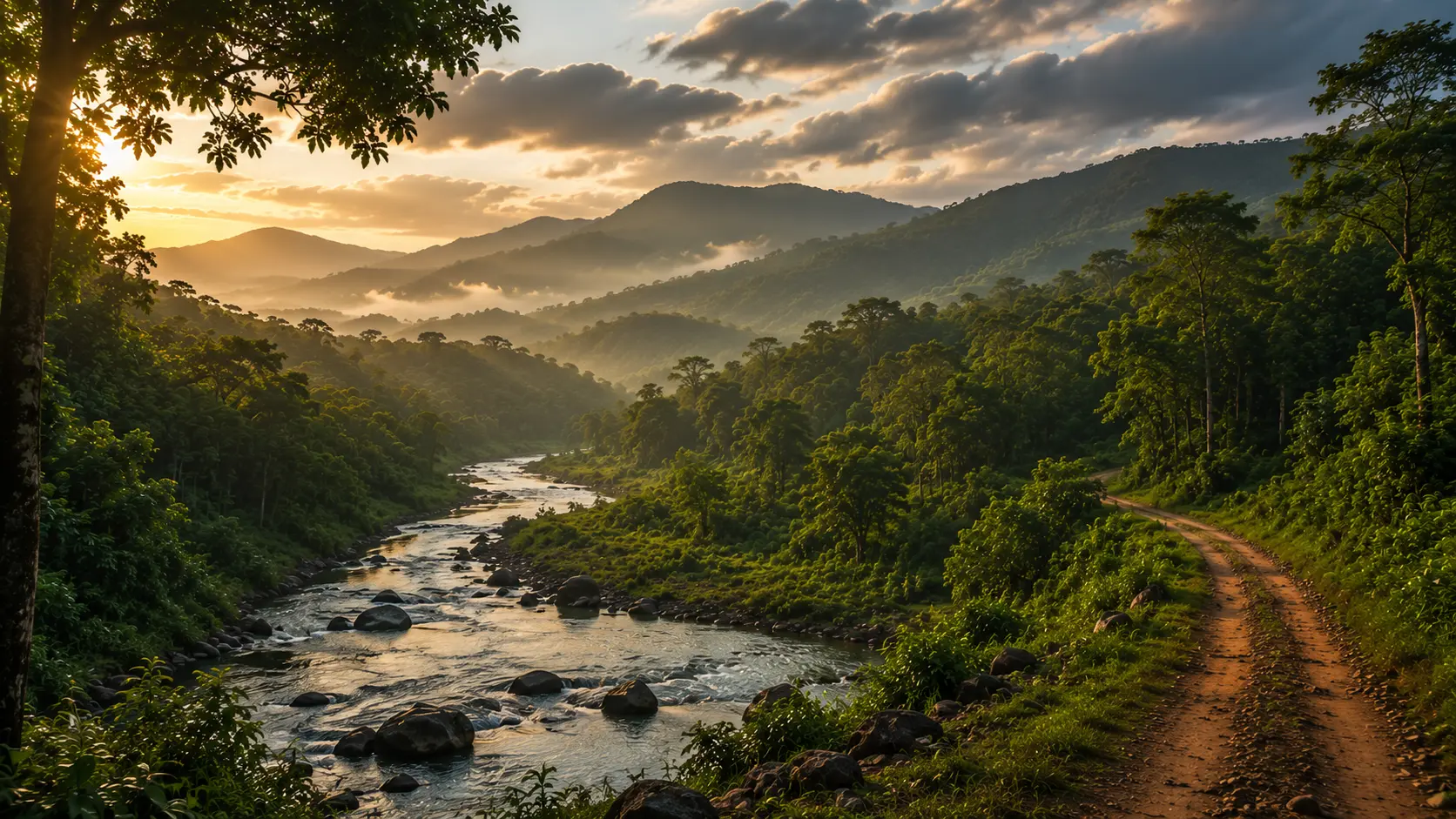
The place
Simlipal is a tiger reserve, an elephant reserve and a UNESCO biosphere reserve stacked on the same block of Odisha's Similipal massif — sal forest, high plateau grassland, and two enormous waterfalls fed by the Budhabalanga.
It is also home to the only known population of melanistic tigers on earth: animals whose stripes have merged into broad black bands. The population is small and genetically isolated, which is the reason for both the fame and the fragility.
Almost nobody sees a tiger here. You come for a forest that still feels genuinely remote, and for the possibility.
When to go
The reserve is open from 1 November to mid-June, and the good months are November to February — dry tracks, cool nights, and the falls still running.
March to May gets hot and dusty inside the forest, though early mornings remain fine and there are fewer vehicles.
Everything closes for the monsoon. The interior roads are dirt and they simply wash away.
Tap a month for the honest verdict
Permits and the gate system
Entry is through two gates: Pithabata, 22 km from Baripada, and Jashipur in the north-west. Vehicle permits are limited per day and are booked online through the reserve's own portal at similipal.org — in the December–January weeks they run out.
Only certain vehicle types are allowed in. Day visitors may enter between 6am and noon; if you hold a rest-house reservation, entry is 6am to 9am, so a late start can cost you the night you booked. Plastic bottles are logged at the gate and checked on exit.
Book the permit and the rest house before you book anything else. Everything about this trip flows from whether you have a pass.
Two ways to do it
In at dawn, up to the Barehipani and Joranda viewpoints, out before dusk. It works, but it is a day of rough driving with very little standing-still time in the forest.
The black tigers
The melanistic tigers of Simlipal are real, extremely few, and effectively never seen by visitors. Camera-trap images are what exist, and that is what you should expect to see — in the interpretation centre, not the forest.
Set your expectations on elephant, gaur, sambar, giant squirrel and outstanding birding, and treat any big-cat sighting as an accident of luck.
Permits, stays and food
Permits are per vehicle, per day, issued online with a named driver and passenger list; carry photo ID matching it. Guides are compulsory and assigned at the gate.
Inside the reserve you stay at forest rest houses — Chahala, Barehipani, Gudugudia, Jamuani — which are basic, atmospheric and booked out months in advance for winter weekends. Meals must be arranged with the caretaker; there are no shops, no restaurants and no mobile network.
Permits & paperwork
What to pack
Layers for cold plateau nights at Chahala, a torch and spare batteries, and repellent — the rest houses have no reliable power.
Add a refillable water bottle (single-use plastic is checked at the gate), all your cash, medication, and a power bank you have actually charged.
What most people get wrong
Want us to plan your Simlipal trip?
Leave your email and we'll reach out once bookings open.