

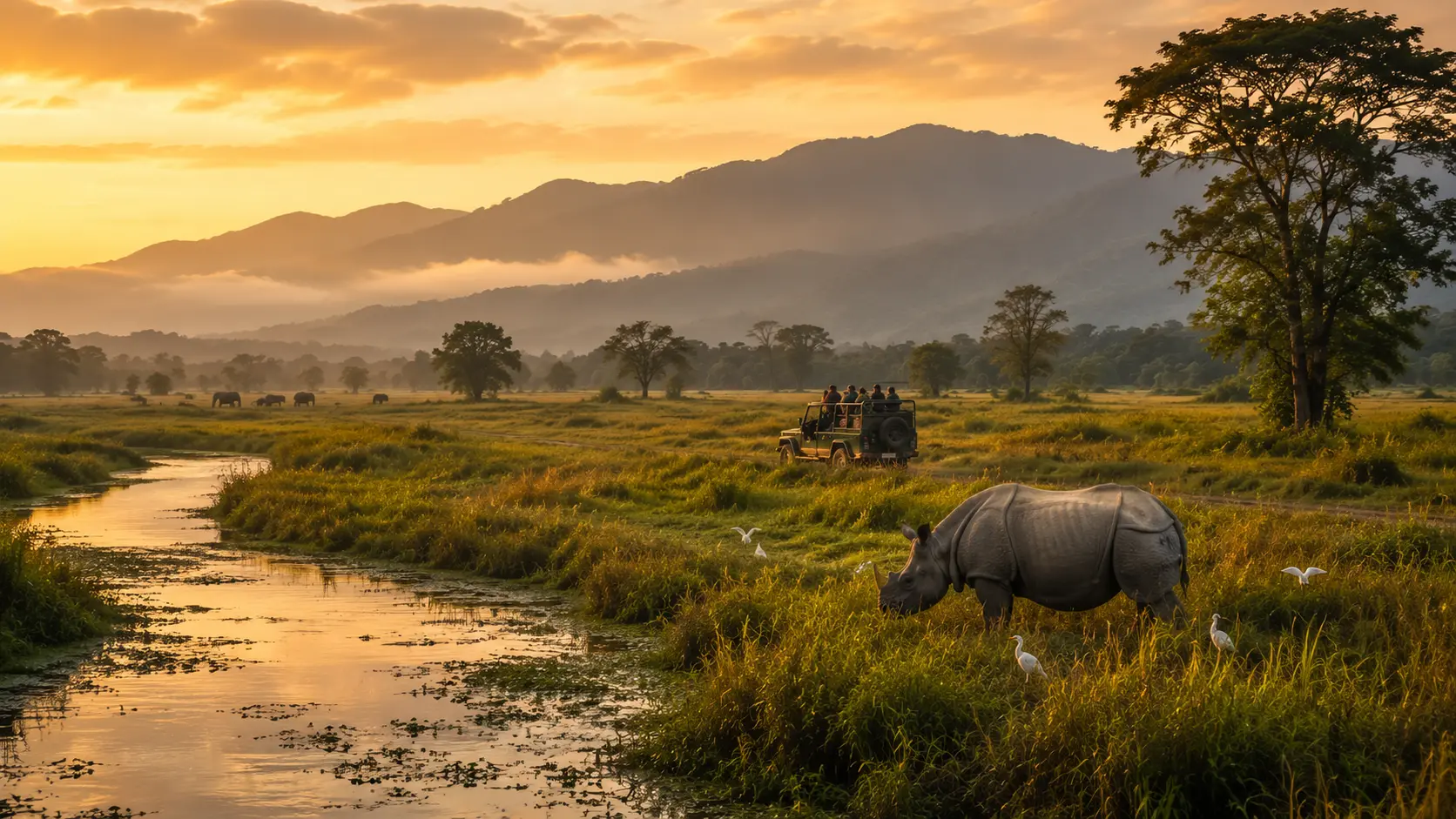
Kaziranga, grassland that holds two-thirds of the rhinos.
A flooded, refilled, re-grown floodplain on the south bank of the Brahmaputra, and the densest population of greater one-horned rhinoceros anywhere. Written the way we'd explain it to a friend.
The place
Kaziranga works because it floods. Every monsoon the Brahmaputra pushes across the park, drowning the grassland, killing weak animals, depositing silt and resetting the whole system. The grass that comes back is what feeds the rhino.
The park runs along the river with the Karbi Anglong hills on its south side, and those hills matter: they are where animals climb to when the water rises, across a national highway, which is why the annual flood is also an annual roadkill crisis.
The flood is not a disaster the park survives. It is the mechanism the park runs on — and the reason you can only visit for six months of the year.
When to go
The park runs a roughly October-to-late-May season and is shut for the monsoon. The exact dates move every year with the water and with demand: the 2025–26 season was extended four days and closed on 29 May 2026, and reopening has fallen anywhere from early October to November. Elephant rides run a narrower window, usually 1 November to 30 April. Confirm the announced dates before booking flights.
November to February is the best of it: cold mornings, mist off the beels, and grass short enough to see through.
March and April are warmer and greener with taller grass and fewer people — a fair trade if you can't come in winter.
Tap a month for the honest verdict
The four ranges
Kohora, the central range, is the default: closest to the hotels at the highway, the most jeeps, and reliably good. Bagori, the western range, has the highest rhino density in the park and is our first pick for a single safari.
Agoratoli, the eastern range, is the birder's range — beels, waterfowl, and a quieter, more forested feel. Burapahar in the west is the least visited and the least productive for large mammals.
Each range needs its own permit and vehicle booking, and the drive between them is 20–40 minutes along the highway. Pick two, don't attempt four.
Two ways to do it
The workhorse. Covers ground, reaches the beels and towers, and gives you a real chance at rhino, elephant, wild buffalo and swamp deer. Morning shifts consistently outperform afternoon ones.
The closed season
From May to October the park is shut and the surrounding highway becomes an animal corridor. Some lodges stay open and sell ‘Kaziranga trips’ in September; there are no safaris to be had.
If your dates fall in the closed season, go to Manas or Nameri instead of paying to look at a locked gate.
Permits, stays and food
Entry permits, vehicle charges, camera fees and a compulsory guide are all paid at the range office, in cash, per range and per shift. Foreign nationals pay several times the Indian rate — budget for it.
Stays cluster along NH-715 at Kohora, from forest department bungalows to a few genuinely good lodges. Food is Assamese: rice, fish, duck with ash gourd, and khar. Book anything decent months ahead for December and January.
Permits & paperwork
What to pack
A serious warm layer for November–January dawns — open jeeps at 5:30am on a floodplain are colder than the forecast suggests. Muted colours, a hat, and binoculars.
Add a dust-proof bag for cameras, repellent for the evenings, cash for park fees, and a torch.
What most people get wrong
Want us to plan your Kaziranga trip?
Leave your email and we'll reach out once bookings open.