

Meghalaya, where the rain builds the bridges.
The wettest inhabited place on earth, and a culture that answered the water by growing its infrastructure out of living fig roots. Everything we've learned, written the way we'd explain it to a friend.
The place
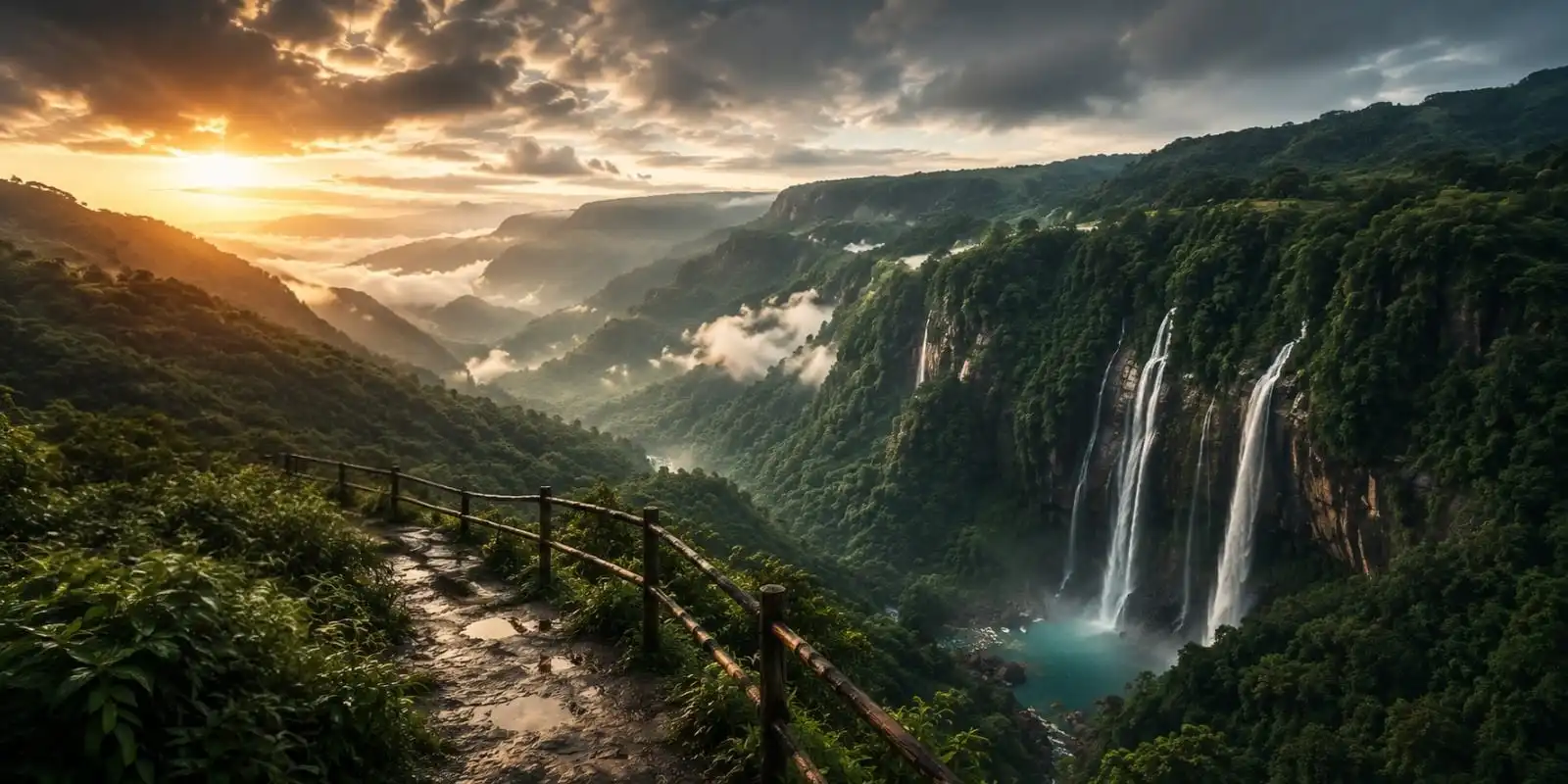
Meghalaya means ‘abode of clouds’, and the state earns it. The Khasi and Jaintia Hills rise abruptly off the Bangladesh plains, catching monsoon that has nowhere else to go. Sohra (Cherrapunji) and Mawsynram trade the world rainfall record between them most years.
That rain shaped everything: the gorges, the waterfalls that appear from the plateau edge, and the living root bridges — rubber fig roots trained across streams over decades because wooden bridges rot here in a season.
The root bridges are not attractions that were built. They are infrastructure that is still growing, maintained by the villages that need them.
When to go
October to April is the straightforward answer: dry air, clear plateau views, dry stone steps on the treks.
The monsoon, roughly June to September, is a different trip entirely. The waterfalls are overwhelming and the cloud is constant — you come for water, not views, and you accept that roads close.
November and February are our picks. Cold nights, empty viewpoints, and everything walkable.
Tap a month for the honest verdict
Getting around
There is no rail head in Meghalaya. Almost everyone arrives at Guwahati and drives three to four hours up to Shillong, or flies into Shillong's small Umroi airport when the limited schedule suits.
Distances are short and slow. Shillong to Sohra is 55 km and takes two hours. Shillong to Dawki is 80 km and takes three. Hire a car with a driver for the full trip rather than day-by-day — shared taxis exist but they will cost you the day.
Fuel up before long stretches, and don't plan anything time-critical after dark: the hill roads have no lighting and heavy truck traffic near the border.
Two ways to do it
Down from Tyrna to Nongriat, an hour at the double-decker bridge, then back up the same steps. Doable in a day but the climb out is genuinely hard on the legs — start by 7am and carry more water than you think.
Rain, and what it does
Rain here is not drizzle. It arrives sideways, for hours, and the stone steps on the root bridge trek turn slick enough to end a trip.
Carry a proper rain shell rather than an umbrella, keep electronics in a dry bag, and expect any plan involving a viewpoint to be a coin toss between May and September. If you're travelling in the monsoon, build in one spare day per three.
Permits, stays and food
No permits are needed for Indian nationals anywhere in this guide. Foreign nationals should carry passports for the Dawki and Mawlynnong areas near the border, where checks are routine.
Shillong has proper hotels; Sohra has homestays and a few resorts; Nongriat has village guesthouses only. Book the Nongriat and Sohra stays ahead in the October–December window.
Permits & paperwork
What to pack
A rain shell that actually works, quick-dry layers, and shoes with real grip — wet stone is the main hazard on every trail here.
Add a dry bag for cameras and phones, a headtorch for the Nongriat walk-out, mosquito repellent for the gorge, and cash. Leeches are a monsoon-only problem.
What most people get wrong
Want us to plan your Meghalaya trip?
Leave your email and we'll reach out once bookings open.