

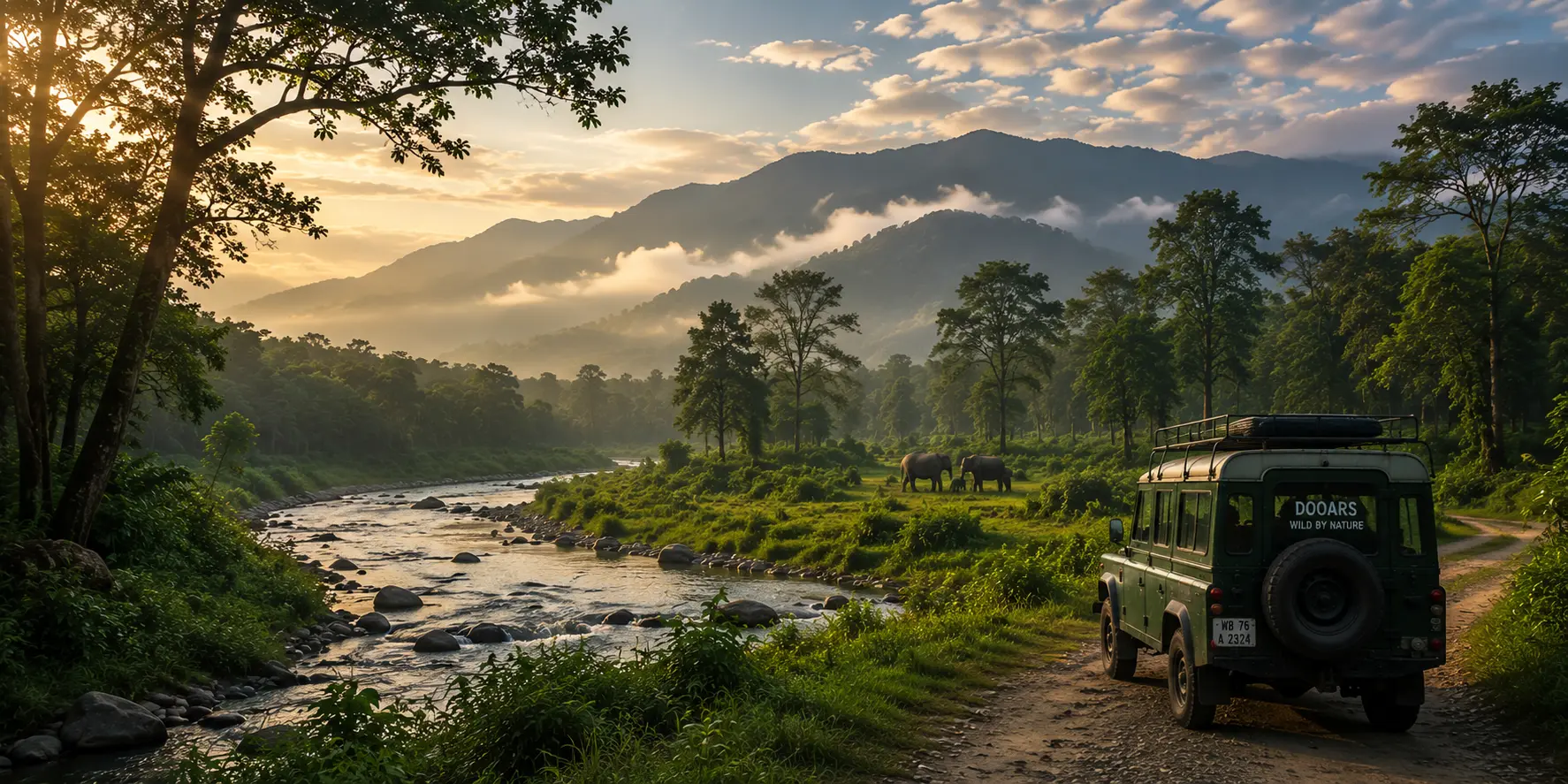
The Dooars, tea gardens with elephants in them.
The floodplain strip between the Bengal plains and the Bhutan hills: four reserves, a dozen rivers, and tea estates that run to the forest line. Written the way we'd explain it to a friend.
The place
The Dooars is a 30 km-wide strip of sal forest, grassland and tea between the Teesta and the Assam border, with the Bhutan foothills rising straight out of it. It is not a single park but a mosaic — reserves, estates, villages and rivers interleaved.
That mosaic is the appeal and the problem: elephants move through tea gardens and across railway lines, which is why you can see wild ones from a road here, and why human–elephant conflict is a daily reality for people who live here.
You are not visiting a wilderness with people at the edges. You are visiting a working landscape that elephants still walk through.
When to go
The forest opens around 16 October and runs to mid-June, and the good months are the dry ones: late October through March.
November to February gives cool mornings, thinner undergrowth and animals drawn to shrinking water — the best sighting odds of the year.
The core areas close from mid-June to mid-September for the monsoon. Anyone offering you a core safari then is selling you something else.
Tap a month for the honest verdict
Safaris and how booking works
Safaris are run by the West Bengal forest department, not by hotels — and this is the part most itineraries get wrong: tickets are issued over the counter at the range office on the day, and advance online pre-booking is generally not possible. Nobody can guarantee you a slot in writing months out. Private vehicles are not allowed inside; you go in a department jeep with a department driver.
Practically: stay near the gate you want, and either be at the counter when it opens or have your lodge send someone the moment it does — that is what "safari included" actually buys. Morning shifts see more than afternoon ones almost everywhere. At Gorumara the elephant ride is effectively limited to guests of the forest department bungalows.
Jaldapara also runs elephant-back rides at dawn in very small numbers, allocated by a lottery-ish daily list. Treat them as a bonus, not a plan.
Two ways to do it
The most accessible half of the Dooars. Watchtowers at Jatraprasad and Chukchuki, short jeep circuits, and the Murti river ten minutes away. Busiest at Christmas and New Year.
What you'll actually see
Indian elephant and gaur are common, one-horned rhino is likely at Jaldapara, and the birding is excellent everywhere. Tigers exist at Buxa in very small numbers and you will not see one.
Two safaris at each park is the honest minimum for a fair chance. One safari is a lottery ticket, and people who buy one ticket usually go home saying the Dooars is overrated.
Permits, stays and food
Entry permits are issued with your safari booking at the range office; carry photo ID for every person in the vehicle. Foreign nationals pay higher entry and camera fees.
Stays run from forest department rest houses inside the reserves — atmospheric, spartan, booked months out — to private resorts at Lataguri, Murti and Madarihat. Food is Bengali and simple: rice, dal, river fish, plenty of tea.
Permits & paperwork
What to pack
Muted clothing, a fleece for pre-dawn jeeps in December and January, and a hat for open grassland. Binoculars change this trip more than any camera.
Add repellent, a torch for lodge power cuts, cash for gate fees, and a dust cover if you're carrying a long lens.
What most people get wrong
Want us to plan your Dooars trip?
Leave your email and we'll reach out once bookings open.