

Ranchi, a plateau city with waterfalls on every side.
Not a hill station and not a wilderness — a working city on a 2,000 ft plateau, ringed by a circuit of waterfalls that most visitors see badly. Written the way we'd explain it to a friend.
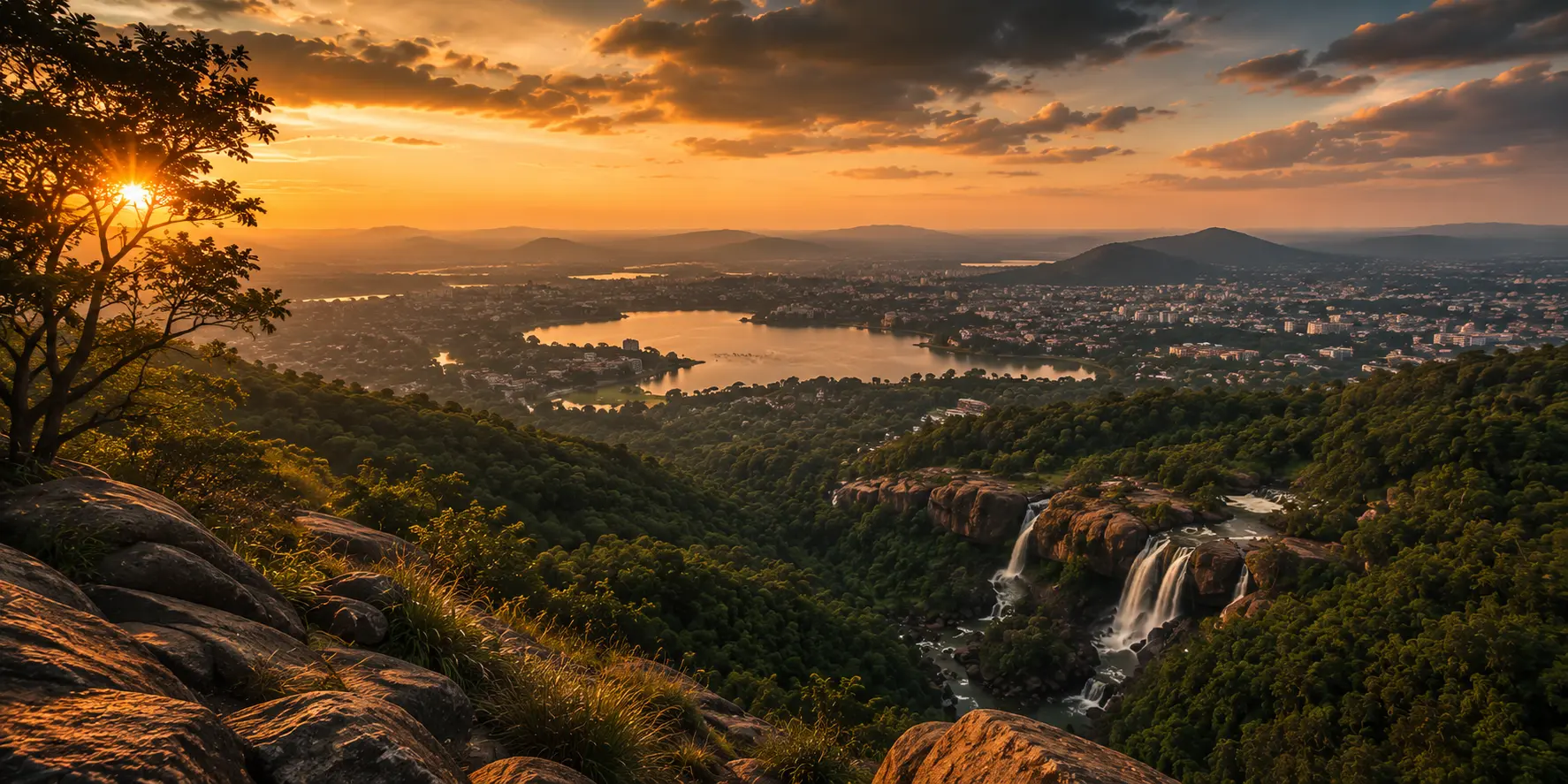
The place
Ranchi is Jharkhand's capital: a real city of traffic, coaching centres and coal money, sitting on the edge of the Chota Nagpur Plateau. It is not scenic in itself, and travellers who expect a hill town leave disappointed.
What makes it worth the trip is the geology just outside it. The Subarnarekha and its tributaries drop off the plateau in a ring of falls — Hundru, Dassam, Jonha, Panch Ghagh, Hirni — each 35 to 80 km from the city in a different direction.
Ranchi is a base, not a destination. Judge the trip by the circuit you drive out of it, not by the city you sleep in.
When to go
September to February is the window. The monsoon has filled the rivers, the dirt approaches have firmed up, and the days are comfortable enough to spend in a car.
March onwards the plateau heats up quickly and the falls thin to a trickle; April and May regularly touch 40°C.
The monsoon itself, July and August, gives you the most water and the most danger — the rocks around Hundru and Dassam kill people most years.
Tap a month for the honest verdict
The waterfall circuit
Hundru is the big one: a 98 m drop about 45 km east, with a long staircase down to the base. Dassam, 40 km south-east, is wider and shorter and the easiest to reach. Jonha (Gautamdhara) sits at the bottom of some 500 steps and is the quietest of the three.
Panch Ghagh and Hirni are further west and better as a second-day pair. Don't attempt Hundru, Dassam and Jonha in one day — they are in different directions and you'll spend the day in the car.
Patratu Valley, 40 km north, is the other reason to come: a steep switchback road above a reservoir that is genuinely one of the better drives in eastern India. Do it in the late afternoon.
Two ways to do it
Day one east for Hundru and Jonha, day two south for Dassam, then Patratu at sunset on the way back. Comfortable, all on tarmac, and you sleep in the same hotel each night.
Heat, and when not to come
April to mid-June is the one period we'd actively tell you to skip. The plateau bakes, the falls are reduced to stains on rock, and there is no altitude to escape to.
If those are your only dates, restructure the trip: start at first light, be off the road by 11am, and treat Patratu and the lake at dusk as the day's real content.
Permits, stays and food
No permits anywhere on this circuit. Small entry and parking fees apply at most falls, collected in cash at the gate.
Ranchi has a full range of business hotels — comfortable, functional, not charming. Netarhat has a handful of government and private guesthouses that need booking ahead on weekends. Food is Jharkhandi and North Indian; litti chokha and thekua are worth going out of your way for.
Permits & paperwork
What to pack
Shoes with grip for wet rock and long staircases, a hat and sunscreen for the exposed viewing decks, and more water than you expect to drink.
A change of clothes in the car, a power bank, cash, and mosquito repellent for evenings near the reservoirs.
What most people get wrong
Want us to plan your Ranchi trip?
Leave your email and we'll reach out once bookings open.